Choosing a pickleball paddle starts with understanding what it is made of. The face and core work together to influence touch, power, spin, and durability. But with terms like carbon fiber, fiberglass, graphite, and polymer honeycomb appearing across product descriptions, knowing what matters can be challenging.
The Complete Guide to Pickleball Paddle Materials explains these differences in practical terms. Face materials contribute to stiffness and feedback, while surface finish affects ball grip. Core material and construction also shape the paddle’s response—from controlled dinks and resets to faster volleys and drives.
Material names are only part of the picture. A T700 carbon fiber label, for example, does not guarantee superior performance. Layering, core thickness, weight distribution, and manufacturing quality all influence how the finished paddle plays.
Whether you are choosing your first paddle, comparing competitive models, or selecting products for a club or store, this guide will help you evaluate materials with confidence. At pickdle, we believe understanding the complete paddle is the foundation of making a better choice.
Why Pickleball Paddle Materials Matter
A pickleball paddle combines a hitting surface, an internal core, and supporting edge or frame construction. These components work together to shape performance, so judging a paddle by its face material alone can be misleading.
- Power: Face stiffness, core response, and weight distribution influence rebound and shot pace. Carbon fiber does not automatically produce more power than fiberglass.
- Control: Predictable response and comfortable handling help players manage placement during dinks, drops, and resets. A softer feel alone does not guarantee better control.
- Spin: Surface texture contributes to ball grip, while stroke technique remains essential. Neither visible weave nor a “raw carbon” label guarantees superior spin.
- Comfort: Construction influences vibration and impact feel. Grip fit, paddle weight, and balance also affect comfort during extended play.
- Durability: Material quality, layer bonding, and edge protection all contribute to longevity. Manufacturing quality and care matter alongside material choice.
- Weight and Handling: The complete construction determines total weight and balance. Swing weight helps explain why two equally heavy paddles can feel different in motion.
The right choice depends on how these characteristics fit your game. Compare the complete paddle’s touch, rebound, and handling rather than treating any one material as the best option for every player.
Carbon Fiber Pickleball Paddles: Benefits, Limitations, and Who They Suit
Carbon fiber combines strength with relatively low weight, making it a useful material for paddle faces. Its stiffness can contribute to responsive feedback, while textured finishes can support spin. Actual performance, however, depends on the core and overall construction.
Raw Carbon vs. Coated Carbon
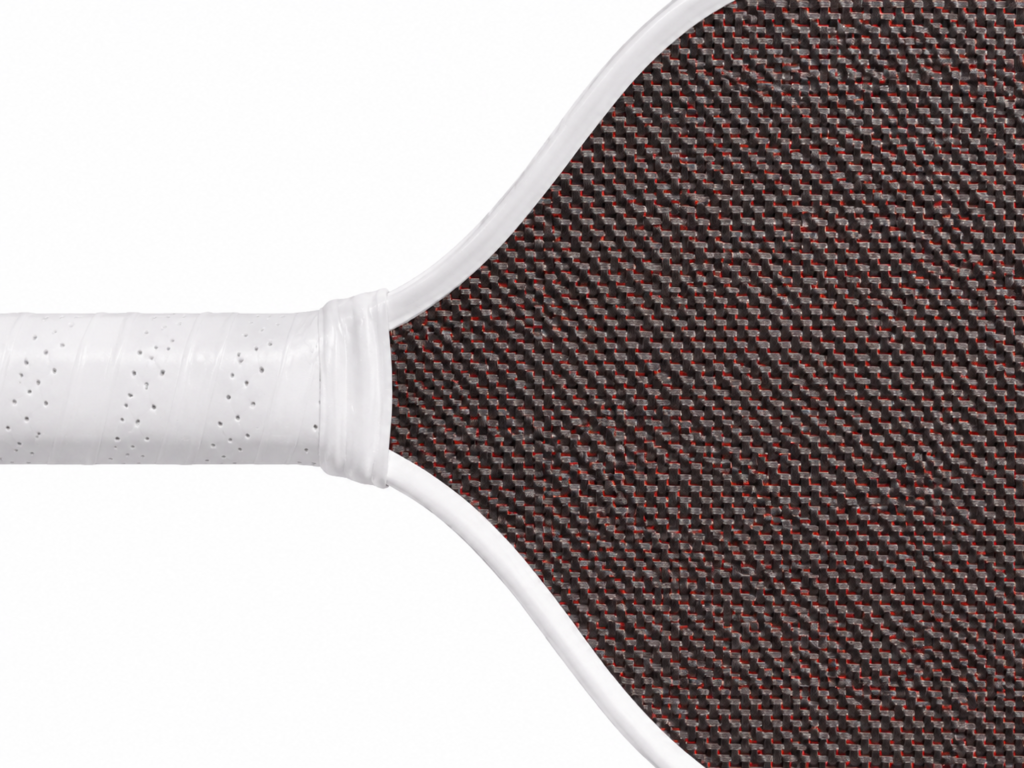
“Raw carbon” generally describes a textured carbon fiber face without a conventional painted finish. The playing surface is still a composite of fibers and resin—not simply exposed fibers.
Coated carbon faces vary: some are smooth, while others feature added texture. Compare the actual surface treatment rather than assuming every raw face produces more spin than every coated one.
What Does T700 Carbon Fiber Mean?
T700 identifies a carbon fiber grade, not a finished-paddle performance standard. Toray’s T700S is classified as a high-tensile-strength, standard-modulus fiber.
It can support strong, lightweight construction, but the label alone does not guarantee better control, greater durability, or professional-level performance. Face layering, resin quality, core design, and manufacturing consistency remain essential.
Key Advantages
- Spin potential: A well-designed textured surface can support topspin and slice.
- Responsive feel: Carbon fiber’s stiffness can provide clear feedback at contact.
- Design flexibility: Carbon faces can be used in control, power, and all-court paddles.
Potential Limitations
- Price: Some carbon fiber models cost more than comparable fiberglass options.
- Feel: Certain constructions may feel too firm for players who prefer a cushioned response.
- Surface wear: Texture can deteriorate with use, even when the paddle remains structurally intact.
Who Should Choose Carbon Fiber?
Carbon fiber paddles are worth considering for players seeking responsive touch or a textured hitting surface. They can suit beginners and experienced players alike. Choose by handling, forgiveness, and on-court response rather than treating the carbon grade as a guarantee of quality.
Fiberglass, Graphite, and Composite Paddles: What’s the Difference?
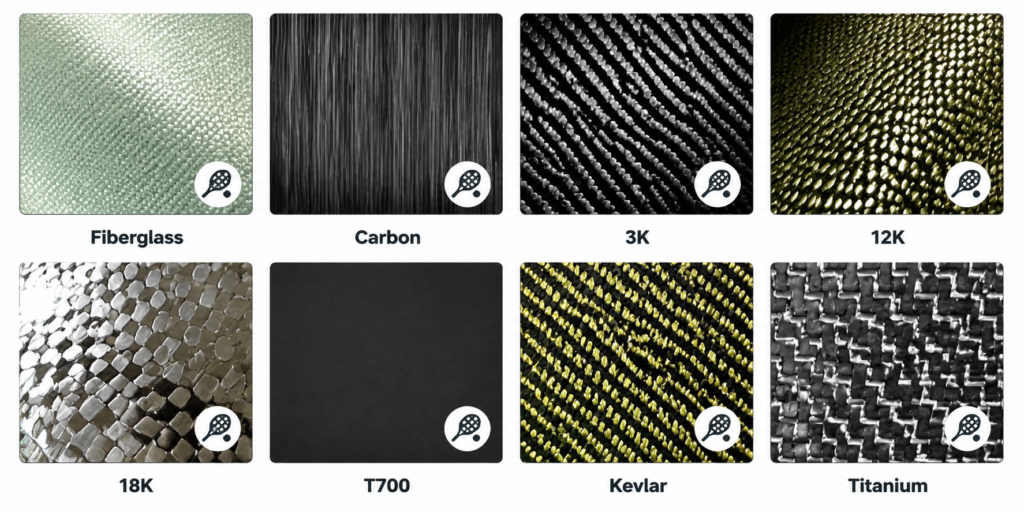
Carbon fiber is only one option for paddle faces. Fiberglass, graphite-labeled constructions, and hybrid designs can also deliver useful performance. Their differences are best understood as material tendencies rather than fixed rankings.
Fiberglass is generally more flexible than carbon fiber and can contribute to a lively rebound. It may appeal to players seeking easier access to pace, although power and forgiveness also depend on the core, shape, and weight distribution.
Graphite is often associated with crisp feedback and controlled touch. However, its terminology can overlap with carbon fiber, so it should not be treated as a separate material that always sits between fiberglass and carbon in stiffness.
Composite is a broad construction term, not a single face material. Carbon fiber and fiberglass faces are themselves composites when combined with resin. Hybrid faces may combine fiber types to adjust response; they are not necessarily budget products.
Paddle Face Comparison
| Face Type | Typical Characteristics | What to Check |
|---|---|---|
| Carbon Fiber | Relatively stiff; used in control, power, and all-court designs | Surface finish, layering, and core construction |
| Fiberglass | Generally more flexible; can provide a springier response | Rebound, touch, and stability |
| Graphite-Labeled | Often marketed for crisp, responsive feel | Exact face specifications and finished-paddle handling |
| Hybrid Composite | Combines materials to target a particular response | Which materials are used and how they are arranged |
Spin, durability, weight, and price vary across individual models. A material label alone cannot reliably rank these qualities.
Quick Buying Tips
- For easier pace: Test a fiberglass model with a lively rebound.
- For controlled touch: Compare control-oriented graphite or carbon fiber models.
- For spin: Assess surface texture and relevant performance testing.
- For value: Compare construction quality, handling, and warranty alongside price.
Choose the paddle that performs well on your key shots, rather than assuming one material is best for every player.
Pickleball Paddle Cores: Materials and Performance
The core supports the paddle face and influences rebound, impact feel, and sound. Its material matters, but thickness, cell structure, and bonding quality also shape the finished paddle’s performance.
Polypropylene Honeycomb
Polypropylene honeycomb is widely used for its versatility and relatively low weight. Depending on the construction, it can support soft touch, lively rebound, or a balance of both.
Cell size alone does not determine power or control. Core density, wall thickness, and face construction also matter. A polypropylene core should not automatically be considered quiet enough for a noise-sensitive court.
Nomex Honeycomb
Nomex cores typically use resin-treated aramid paper formed into a honeycomb structure. They are associated with a firm feel, lively response, and a more pronounced impact sound.
Players who enjoy direct feedback may appreciate this construction. However, durability cannot be reliably ranked against polypropylene without comparing specific designs.
Aluminum Honeycomb
Aluminum honeycomb can provide lightweight support and a touch-oriented response. It is not inherently heavier than polypropylene; weight depends on core dimensions and construction.
Permanent deformation can affect consistency, so structural condition is an important consideration when evaluating a used paddle.
Core Material Comparison
| Core Material | Common Characteristics | What to Evaluate |
|---|---|---|
| Polypropylene | Versatile response; lightweight honeycomb construction | Thickness, cell structure, and rebound |
| Nomex | Firm feedback; often a lively, louder response | Touch, impact sound, and comfort |
| Aluminum | Lightweight support; often associated with controlled touch | Stability and signs of deformation |
These are three established core options, rather than a complete list. Foam and hybrid constructions are also available. Choose by the finished paddle’s response, handling, and consistency—not the core label alone.
How to Choose a Paddle Material for Your Playing Style
The best paddle complements your technique and feels comfortable throughout a match. Use material specifications as a starting point, then compare the complete paddle’s touch, power, and handling.
- For Beginners: Prioritize manageable weight, a comfortable grip, and forgiving off-center response. Fiberglass, carbon fiber, and hybrid models can all work; no material is exclusively for advanced players.
- For Intermediate Players: Look for predictable response as you develop drops, dinks, and resets. A textured face may support spin, but it should also deliver the pace and handling you need.
- For Competitive Players: Evaluate specific models for stability, spin, and consistency under pressure. A T700 label or fine-cell core alone does not establish superior performance.
- For Singles Players: Consider extra reach and sufficient power for passing shots. An elongated design may help, provided its swing weight remains comfortable.
- For Doubles Players: Balance quick handling with dependable blocks, resets, and attacking volleys. Control and power both matter during fast kitchen-line exchanges.
- For Power Players: Test fiberglass or power-oriented carbon models for accessible pace. Assess rebound and swing weight rather than relying on core cell size.
- For Control Players: Seek predictable depth and comfortable touch on soft shots. Control-oriented carbon or graphite models are worth testing, but texture primarily supports spin rather than guaranteeing better control.
Whenever possible, test serves, drives, volleys, and soft shots before choosing. The right paddle should support your strongest shots while remaining manageable in defensive situations.
Choose Your Next Pickleball Paddle with pickdle
At pickdle, we believe choosing a paddle starts with understanding the complete design. Face material, core construction, surface finish, and weight distribution all contribute to how a paddle feels and performs.
Whether you prefer controlled dinks, quick volleys, or powerful drives, compare these features with your playing needs. Look beyond material labels to find the balance of touch, pace, and handling that suits you.
Explore pickdle’s paddle range to compare available options. For product specifications or wholesale inquiries, contact our team to discuss your requirements.
Frequently Asked Questions
Which pickleball paddle material is best?
There is no single best material for everyone. Carbon fiber, fiberglass, and hybrid constructions can suit different needs. Compare the finished paddle’s touch, power, spin, and handling rather than choosing by material alone.
Is carbon fiber better than fiberglass?
Carbon fiber is generally stiffer, while fiberglass is more flexible and can provide a springier response. Neither automatically offers better control, spin, or durability; those qualities depend on the complete construction.
What is T700 carbon fiber?
T700 identifies a carbon fiber grade. Toray’s T700S is a high-tensile-strength, standard-modulus fiber used in composite construction. Its strength-to-weight properties are useful, but the label alone does not guarantee superior paddle performance.
What is a polypropylene honeycomb core?
It is an internal structure made from honeycomb-shaped polypropylene cells. It provides lightweight support, while its thickness, density, and construction influence the paddle’s response and feel.
Which paddle is best for beginners?
Look for comfortable handling, an appropriate grip size, and forgiving off-center response. Fiberglass, carbon fiber, and hybrid paddles can all be suitable when the overall design matches the player.
Where can I buy pickdle pickleball paddles?
Explore the paddle range on the pickdle website. For model specifications, availability, or wholesale inquiries, contact our team.
Are carbon fiber paddles worth the investment?
They can be if a particular model offers the feel and performance you need. Compare its construction, handling, and surface finish with other options rather than assuming a higher price or T700 label guarantees better value.
How do I choose the right paddle material?
Start with your priorities: controlled touch, accessible power, spin, or quick handling. Then compare face material alongside core design, weight, balance, and shape. Testing a paddle can help confirm whether it suits your game.
Conclusion
Paddle materials matter, but they work as part of a complete design. Carbon fiber can support stiff, responsive faces, fiberglass can contribute a livelier rebound, and core construction helps shape touch and consistency.
The right choice is a paddle that feels comfortable and supports the shots you use most. Explore pickdle’s paddle range, or contact our team for product specifications and wholesale inquiries.