Thermoformed pickleball paddles are often promoted for power, stability, and solid feel. But what does “thermoformed” actually mean, and how does it affect performance? Understanding the construction helps you decide whether this type of paddle suits your game.
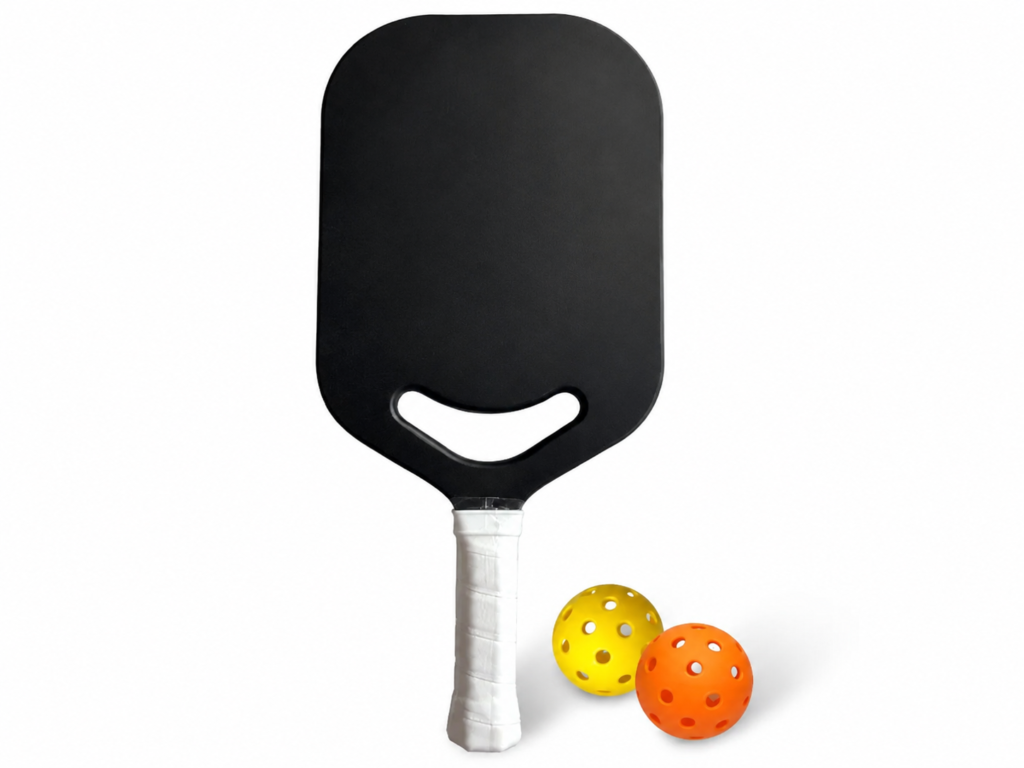
A thermoformed pickleball paddle uses heat and pressure during molding to bond its components into an integrated structure. Many models combine perimeter reinforcement with foam around the edges, which can improve stability and off-center response. Thermoforming is a construction method—not a face material or a guarantee of better performance.
The result can be a firm, responsive paddle with accessible power, although touch, forgiveness, and durability vary by design. Core thickness, face construction, and weight distribution still matter. This guide explains how thermoformed paddles are built, their potential benefits and limitations, and what to consider before choosing one.
How Are Thermoformed Pickleball Paddles Made?
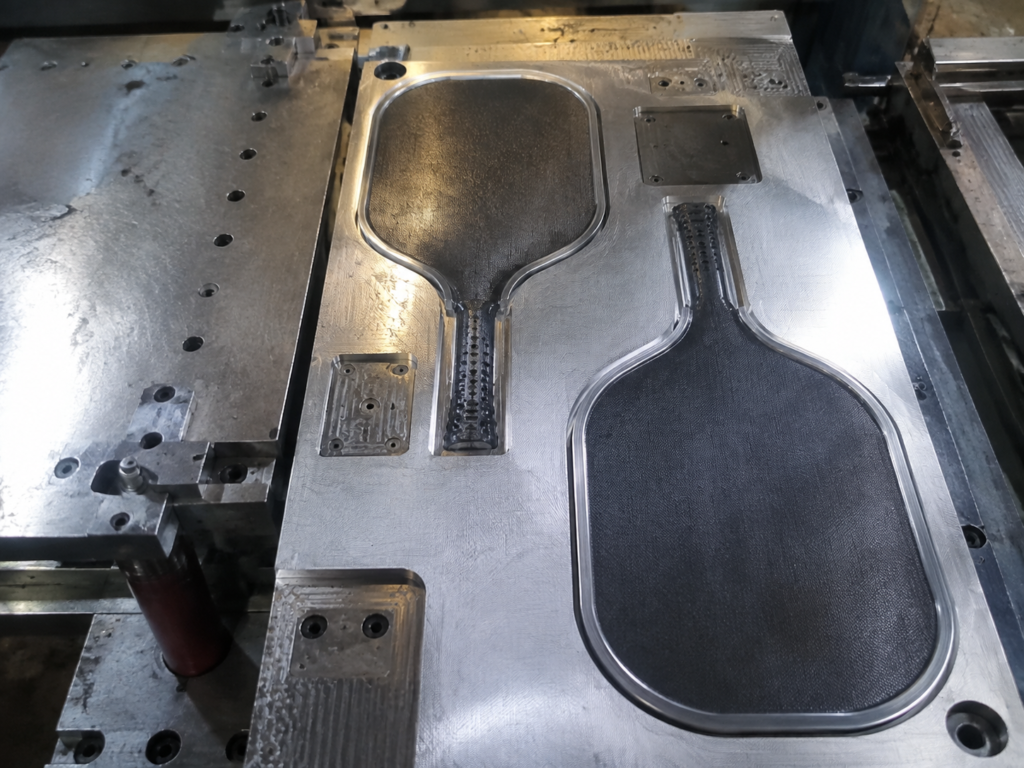
In pickleball manufacturing, “thermoforming” generally refers to molding the paddle assembly under heat and pressure. Unlike conventional plastic-sheet thermoforming, this process commonly involves bonding composite face layers, a core, and perimeter reinforcement.
Heat and pressure help consolidate the paddle’s layers into an integrated structure. Many designs also incorporate foam around the perimeter to support the edges and influence stability. The exact materials, assembly sequence, and molding conditions vary by manufacturer.
Key Manufacturing Steps
Material preparation: Face layers, core material, and reinforcement are cut and arranged. Many designs use carbon fiber faces over a honeycomb core, although other constructions are possible.
Perimeter reinforcement: Additional composite material is positioned around the edges and, in some designs, through the throat and handle. Foam may also be incorporated around the core’s perimeter.
Heat and pressure molding: The assembly is placed in a mold. Controlled heat and pressure consolidate the layers and cure the resin or adhesive system, depending on the construction.
Cooling and finishing: After the required molding cycle, the paddle is cooled, removed, trimmed, and finished with components such as the grip and edge protection.
What Determines Manufacturing Quality?
Temperature, pressure, and processing time must suit the materials being used. Poorly controlled conditions can compromise bonding or damage the core. Layer alignment, resin distribution, and perimeter construction also influence consistency.
A well-executed process can produce a solid, reinforced paddle, but thermoforming does not eliminate the possibility of delamination or core damage. Finished-product inspection and performance testing remain essential.
What Are the Benefits of Thermoformed Pickleball Paddles?
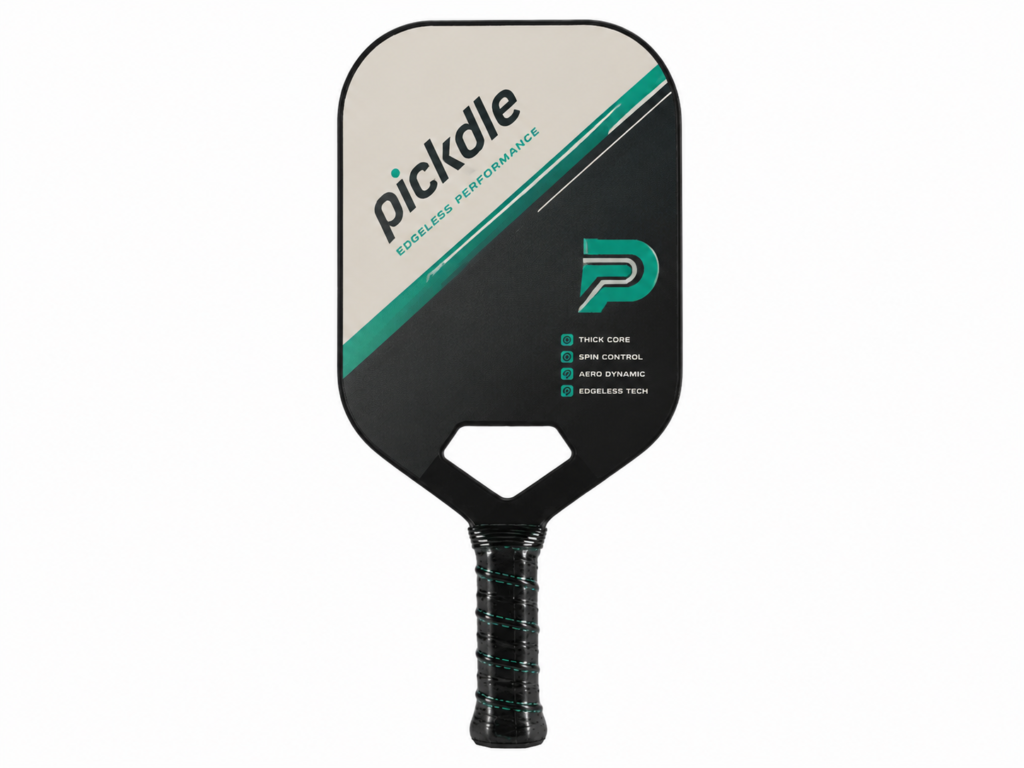
Thermoformed paddles are worth considering if you prefer solid feedback, accessible power, and stability during fast exchanges. Their reinforced construction can influence how the paddle responds, although performance varies between models.
A well-designed thermoformed paddle can deliver a lively rebound and dependable off-center response. Perimeter reinforcement and edge foam may improve stability, but the process alone does not guarantee better control, a larger sweet spot, or longer lifespan.
Power and Responsive Feel
Many thermoformed designs have a firm, integrated structure that can support powerful drives and putaways. Players who enjoy a crisp response may appreciate this feel, while those who prefer cushioned touch should test the paddle on dinks and resets.
Stability and Forgiveness
Reinforced edges and perimeter foam can help the paddle resist twisting on off-center contact. This may make more of the hitting surface feel usable, but the effective sweet spot still depends on shape, core construction, and weight distribution.
Structural Support and Comfort
An integrated layup can reinforce the edges, throat, and handle. Edge foam may also reduce vibration in some designs. However, bonding quality and core integrity remain important: thermoformed paddles can still develop damage or performance changes.
Is a Thermoformed Paddle Right for You?
Compare its attacking response with its soft-game touch. A paddle that adds useful pace to drives should also let you manage depth on blocks and resets. Choose the model that offers a comfortable balance of power, handling, and consistency for your game.
Potential Drawbacks of Thermoformed Pickleball Paddles
Thermoformed paddles can offer solid feedback and accessible power, but those characteristics may not suit every player. The trade-offs depend on the specific design rather than the manufacturing method alone.
Some thermoformed models feel firm or lively, requiring adjustments on dinks, drops, and resets. Handling, price, and construction quality also deserve attention before choosing one.
A Firmer, More Powerful Response
Players switching from a softer paddle may find that gentle shots travel farther than expected. Adjusting swing length and grip pressure can take practice. However, stiffness does not automatically mean poor control; some thermoformed designs prioritize controlled touch.
Handling and Comfort
Perimeter reinforcement and foam can change weight distribution. A higher swing weight may make quick exchanges more demanding, while a firm impact feel may be uncomfortable for players who prefer cushioned feedback. Compare actual weight and balance rather than assuming all thermoformed paddles handle alike.
Durability Is Not Guaranteed
Thermoforming does not eliminate delamination, bonding defects, or core damage. Manufacturing quality remains important, and persistent changes in sound or ball response warrant inspection.
Price and Player Fit
Some models carry a premium price, which is worthwhile only if their performance suits your needs. Beginners and experienced players can both use thermoformed paddles successfully. Test soft shots, defensive blocks, and attacking drives to decide whether the response feels manageable.
Thermoformed vs. Traditional Pickleball Paddles
Thermoformed and traditional paddles differ primarily in how their components are assembled. These construction methods can influence feel and response, but neither guarantees better performance for every player.
Thermoformed paddles often feature reinforced, integrated construction that can provide a firm, lively response. Traditional sandwich designs can offer softer feedback, although power, control, and durability vary across both categories.
Construction and Performance Compared
Traditional sandwich paddles generally bond separate face sheets to a core. Thermoformed designs consolidate the assembly under heat and pressure, often incorporating perimeter reinforcement and edge foam. Both methods use multiple materials and bonded layers; “unibody” does not mean the paddle is a single solid material.
| Feature | Thermoformed Paddles | Traditional Sandwich Paddles |
|---|---|---|
| Construction | Heat-and-pressure molding, often with perimeter reinforcement | Face sheets bonded to a core |
| Typical feel | Often firm and responsive | Can feel softer, depending on construction |
| Power | Many models emphasize lively rebound | Ranges from control-oriented to powerful |
| Forgiveness | Edge reinforcement may improve off-center stability | Depends on shape, core, and weight distribution |
| Durability | Depends on bonding quality and core integrity | Depends on bonding quality and core integrity |
Which Should You Choose?
A thermoformed model is worth testing if you enjoy crisp feedback and accessible attacking power. A softer sandwich model may suit you if cushioned touch is your priority.
Beginners and experienced players can use either construction successfully. Compare handling during fast volleys, depth control on resets, and response on drives. Choose the paddle that feels predictable across your game rather than relying on the construction label alone.
Conclusion
Thermoformed pickleball paddles can offer a firm, responsive feel and accessible power through heat-and-pressure molding and reinforced construction. However, control, forgiveness, and durability still depend on the complete design and manufacturing quality.
Choose a paddle that balances attacking pace with comfortable handling and predictable touch. Testing drives, volleys, and resets will help you decide whether a thermoformed model suits your game.