Choosing the right pickleball paddle starts with understanding how its materials affect performance. Graphite is often associated with control and a responsive feel, but does it automatically make a paddle better? The answer depends on how the face material works with the rest of the paddle.
Yes, graphite pickleball paddles can be a good choice for players who value control, responsiveness, and precise shot placement. However, the face material is only one part of the equation. Core construction, thickness, weight, and shape also influence touch, power, and maneuverability.
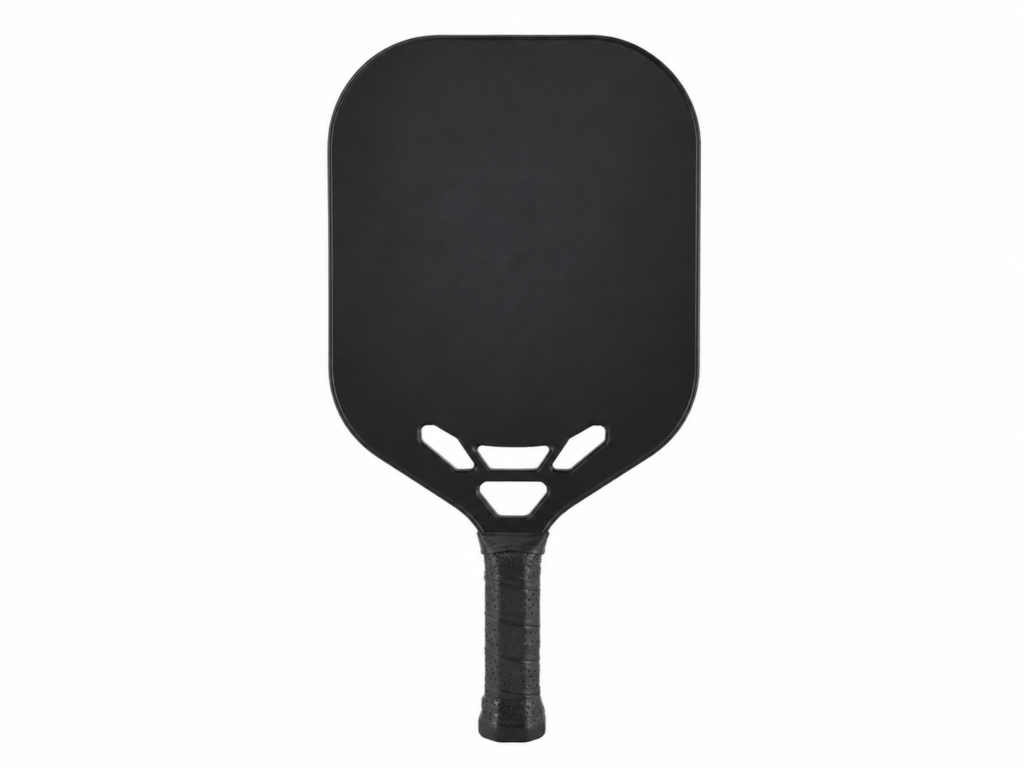
A well-designed graphite paddle can suit the controlled shots used in the soft game, including dinks, blocks, and resets. Still, a graphite face does not guarantee a lightweight paddle or superior control. Two paddles with the same face material can feel noticeably different because of their overall construction.
Understanding these differences makes it easier to choose a paddle that matches your playing style. This guide examines what graphite contributes to paddle performance, where its limitations lie, and what to consider before making your choice.
Are Graphite Pickleball Paddles Good? Pros, Cons, and Who They’re For
Graphite pickleball paddles have a reputation for responsive touch and controlled shot placement. But how much of that performance comes from the graphite face, and which players benefit most? Understanding both the advantages and limitations helps you look beyond the material label.
Graphite pickleball paddles can be a good choice for players who prefer crisp feedback and a control-oriented playing experience. Their actual performance depends on the complete construction, including the core, surface finish, weight distribution, and shape. Graphite alone does not guarantee faster hands, greater accuracy, or less power.
The best way to evaluate a graphite paddle is to consider how it handles the shots you use most. During dinks and resets, look for predictable ball response. In quick exchanges at the kitchen line, assess how easily you can reposition the paddle. On drives and serves, check whether it delivers enough depth without requiring an uncomfortable swing.
The Pros: Where Graphite Paddles Can Excel
- Responsive feedback: Graphite faces are commonly associated with a crisp feel at contact. Players who prefer clear feedback may find this helpful when judging shot pace and placement.
- Control-oriented options: When paired with a suitable core and construction, a graphite face can work well for paddles designed around dinks, blocks, and resets.
- Maneuverable designs: Some graphite paddles are easy to move during fast volleys. However, hand speed depends more directly on swing weight and weight distribution than on the face material itself.
The Cons: What to Consider Before Choosing
- Spin varies with the surface: A smooth graphite face may offer less grip than a textured surface. Fiberglass is not automatically more spin-friendly; surface finish and stroke technique both matter.
- Power varies between models: Some graphite paddles prioritize touch over effortless pace. Others provide a livelier response. Evaluate the complete paddle rather than assuming that every graphite model lacks power.
- Crisp feedback may not suit everyone: Players who prefer a softer, more cushioned impact may find certain graphite paddles too firm. Core construction also influences this sensation.
Who Are Graphite Paddles Best For?
Graphite paddles are worth considering if you value precise placement, responsive feedback, and a paddle that feels comfortable during the soft game. Players who rely on controlled blocks and quick transitions at the net may particularly appreciate a suitable model.
They are not reserved for advanced players. Beginners can also use graphite paddles successfully, provided the weight, grip size, and forgiveness suit their needs. More experienced players should assess whether a particular model offers the balance of touch, spin, and power their game requires.
Graphite, Fiberglass, and Carbon Fiber Paddles: Understanding the Differences
Paddle materials influence how a shot feels, but product labels rarely tell the whole story. Two paddles with similar face materials can deliver noticeably different levels of touch, power, and maneuverability.
Graphite and carbon fiber paddle faces are generally associated with stiffness and responsive feedback, while fiberglass faces tend to be more flexible and can provide a livelier rebound. However, spin depends heavily on surface finish, and handling depends on the paddle’s weight distribution. The complete construction matters more than the material name alone.
Graphite vs. Carbon Fiber: How Different Are They?
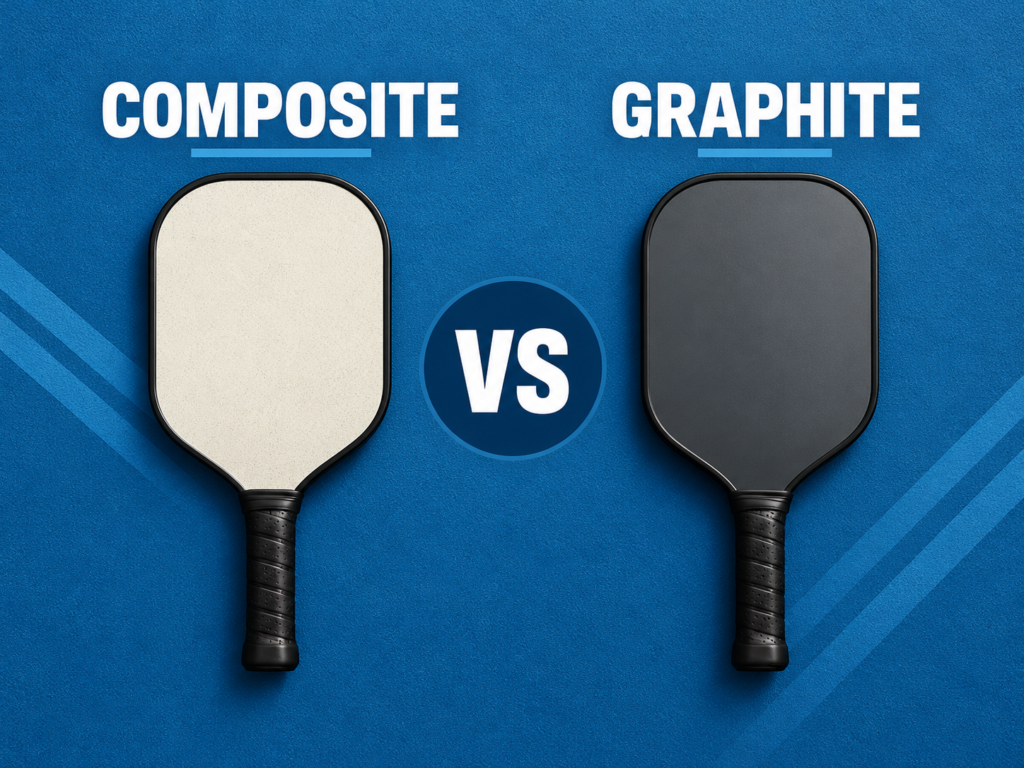
In pickleball product descriptions, “graphite” and “carbon fiber” are sometimes used interchangeably or inconsistently. Treating them as two clearly separate performance categories can therefore be misleading.
A graphite label does not identify the exact fiber grade, weave, resin system, or number of face layers. Likewise, a carbon fiber designation does not automatically mean the paddle has a textured playing surface. For a useful comparison, look at the stated face construction and finish alongside the core specifications.
Stiffness and Rebound: What Changes at Contact?
Carbon-based faces typically provide a relatively stiff hitting surface. Depending on the construction, this can produce firm, direct feedback that appeals to players who prefer a clearly defined response.
Fiberglass is generally less stiff than carbon fiber. In comparable constructions, its greater flexibility can contribute to a springier response and easier access to pace.
These are material tendencies rather than guarantees. Face thickness, layer arrangement, core design, and manufacturing methods can change the result. A carbon fiber paddle can be built for power, just as a fiberglass paddle can be designed for controlled play.
Spin: Surface Finish Matters More Than the Label
Fiberglass is not inherently a rough or “grippy” playing surface. Both fiberglass and carbon-based faces can have smooth finishes or engineered textures.
The contact surface helps determine how much friction the paddle can generate against the ball. Textured carbon fiber, treated fiberglass, and hybrid faces can all support spin, but their performance varies between models.
Neither visible weave nor a material label proves superior spin. Compare the actual surface finish and, where available, relevant test results. Stroke mechanics also remain essential.
Weight and Hand Speed: Compare the Finished Paddle
A thin graphite or carbon fiber face does not automatically make the complete paddle lightweight. The core, handle, edge protection, and added weighting all contribute to its mass and balance.
For quick exchanges at the kitchen line, swing weight is particularly useful: it describes how resistant the paddle is to being swung. Two paddles with the same total weight can feel very different if one carries more weight toward the tip.
Paddle Material Comparison
| Feature | Graphite-Labeled Faces | Carbon Fiber Faces | Fiberglass Faces |
|---|---|---|---|
| Material description | May overlap with carbon fiber terminology; check specifications | Carbon fiber construction with varying grades, layers, and finishes | Glass fiber composite construction |
| Typical response | Often marketed for crisp, responsive touch | Generally stiff; feel varies with the complete design | Generally more flexible, with a potentially springier rebound |
| Control and power | Cannot be determined from the label alone | Can support control, all-court, or power designs | Can support lively rebound without being limited to power play |
| Spin potential | Depends on the actual playing surface | Depends on texture, finish, and technique | Depends on texture, finish, and technique |
| Handling | Check total weight, balance, and swing weight | Check total weight, balance, and swing weight | Check total weight, balance, and swing weight |
Choose according to the response you need on court. Assess touch during dinks and resets, rebound during volleys, and depth during drives. Those observations give you a more useful basis for selection than assigning each material to a fixed playing style.
Who Should Choose a Graphite Pickleball Paddle?
The right graphite paddle depends on your playing style, not just your experience. Look for a model that feels comfortable and responds predictably to your shots.
A control-oriented graphite paddle can suit players who value precise placement, responsive touch, and a consistent soft game. Beginners can also benefit from a suitable model, provided its weight, grip, and forgiveness match their needs.
If you enjoy dink rallies, controlled blocks, and carefully placed third-shot drops, a graphite paddle is worth considering. For faster exchanges at the net, compare swing weight and balance. Players seeking powerful drives or heavy spin should also assess the core construction and surface finish—the graphite label alone does not determine performance.
Beyond Graphite: Core Thickness, Weight, and Shape
A graphite face tells you only part of a paddle’s story. Two models with similar faces can perform differently because of their core construction, weight distribution, and dimensions.
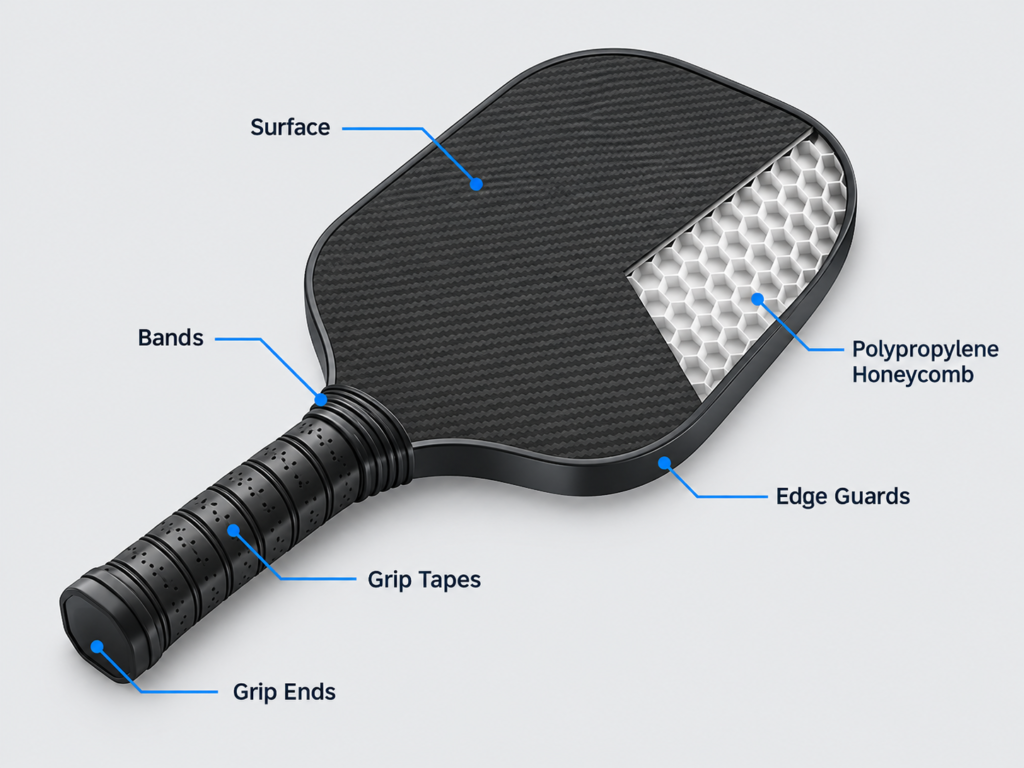
Evaluate the complete paddle: core design influences response, weight and balance affect handling, and shape changes reach and forgiveness. Face material contributes to performance, but cannot define it alone.
Core Thickness: Touch and Rebound
In otherwise similar designs, a thicker core often provides a softer, more controlled response, while a thinner core tends to feel firmer and livelier. However, thickness alone does not guarantee a larger sweet spot or greater power; core material and construction also matter.
Weight and Balance: Power and Maneuverability
Greater swing weight can support power and stability, but may slow quick reactions at the net. Lower swing weight generally makes a paddle easier to reposition. Compare balance as well as total weight—two equally heavy paddles can handle differently.
Shape: Reach and Forgiveness
Elongated paddles provide extra reach, though their narrower faces may offer less lateral forgiveness. Wider designs generally provide more room for off-center contact. Choose according to your need for reach, comfortable handling, and consistent shot placement.
How Long Do Graphite Pickleball Paddles Last?
A graphite paddle’s lifespan depends on its construction, frequency of use, and care. The face material alone cannot tell you how long it will maintain its performance.
A well-made graphite paddle can provide long-lasting use, but there is no guaranteed replacement timeline. Judge its condition by consistent ball response, surface wear, and structural integrity rather than age alone.
What Affects Durability?
- Playing frequency: Frequent, intensive play increases wear on the hitting surface and overall construction.
- Court contact: Scraping the ground can damage the edge guard and exposed face.
- Storage conditions: Extreme temperatures and prolonged moisture exposure can affect the paddle’s condition.
How to Extend Its Useful Life
Use a protective cover during transport, avoid leaving the paddle in a hot car, and store it somewhere dry at room temperature. Clean the face according to the manufacturer’s instructions; cleaning removes residue but cannot restore worn texture.
Minor cosmetic marks do not necessarily require replacement. However, cracks, loose components, or a persistent change in ball response warrant closer inspection.
Conclusion
Graphite pickleball paddles can be a good choice for players who value responsive touch and controlled shot placement. However, the graphite face is only part of the design—core construction, surface texture, weight, and shape all influence performance.
Choose a paddle that matches your playing style and feels comfortable across soft shots, volleys, and drives. The best choice is the complete paddle that supports your game, rather than the material label alone.
FAQs About Graphite Pickleball Paddles
Are graphite pickleball paddles better than fiberglass?
Neither material is universally better. Graphite faces often provide crisp feedback, while fiberglass faces tend to offer a springier response. Your choice should depend on the complete paddle’s feel, handling, and fit with your playing style.
Do graphite paddles generate less spin?
Not necessarily. Spin depends on surface texture, paddle construction, and stroke technique. A graphite label alone does not indicate how much spin a paddle can produce.
How long do graphite pickleball paddles last?
There is no fixed lifespan. Construction quality, playing frequency, and care all matter. Monitor surface wear, structural damage, and changes in ball response rather than relying on a specific replacement schedule.
Is graphite the same as carbon fiber in pickleball paddles?
The terms sometimes overlap in product descriptions, but they do not guarantee identical construction. Check the stated face material, layering, and finish when comparing models.
Are graphite paddles suitable for beginners?
Yes. Beginners can use graphite paddles, provided the weight, grip size, and forgiveness suit their needs. Comfortable handling and predictable response matter more than the material label.